
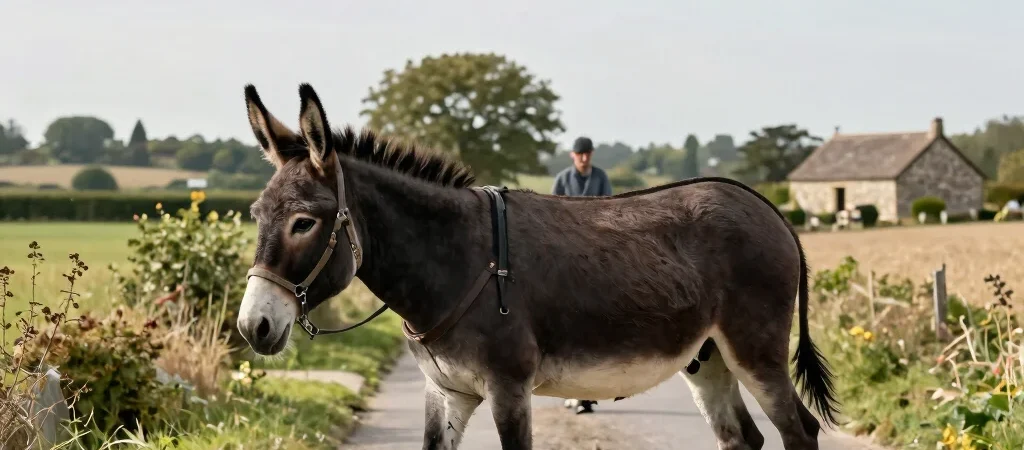
On a Berry path, a donkey walking calmly beside its handler tells a more complete story than a display of old tools. The Grand Noir du Berry has a place in the region’s working heritage, while contemporary activities can include walking routes, light driving, or other suitable tasks. The point is not to recreate every past use, but to match each animal to work it can do comfortably.
Choose work with care
A donkey’s age, fitness, training, health, and temperament all matter when considering a task. Walking alongside a handler is different from pulling a cart, and neither should be assumed suitable without preparation. Owners should seek experienced instruction and veterinary guidance where needed, especially before changing an animal’s workload.
Equipment and steady training
Well-fitted tack or harness, safe routes, and gradual training help reduce avoidable discomfort and confusion. Introduce new equipment patiently, watch the donkey’s response, and stop if it shows signs of distress or pain. On rural lanes, handlers also need to plan for traffic, footing, weather, and places to pause.
Heritage in living practice
Responsible use can keep practical knowledge visible: how to handle a donkey, care for its feet, and choose work suited to its abilities. But use alone does not guarantee the preservation of a breed, and it should never come at the animal’s expense. A worthwhile tradition is one that can be passed on alongside good care and an honest account of what the evidence does—and does not—show.