
Conservation
Keeping the Berry donkey within its landscape
Domestic breeds are part of regional farming heritage and ecosystem care. Here we look at why the Grand Noir du Berry matters beyond its own pastures, and what careful stewardship can look like in practice.
Grazing as ecological work
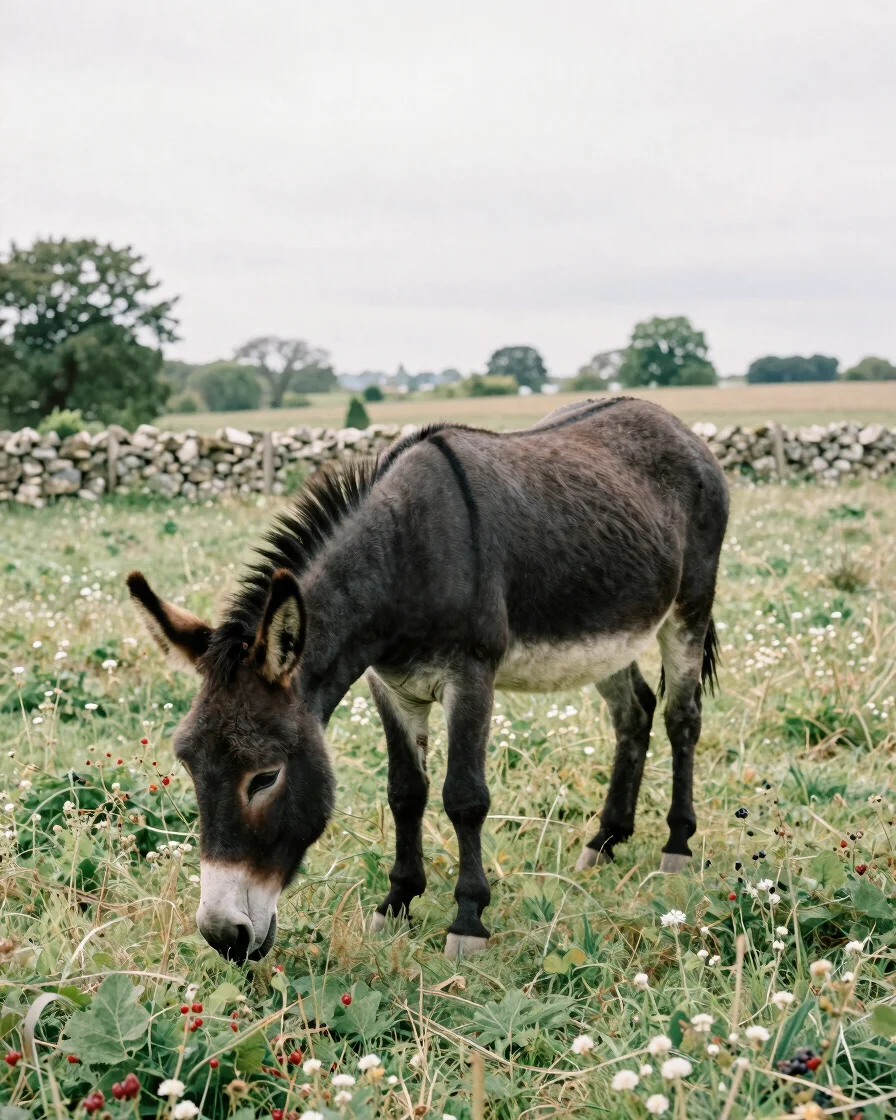
Donkeys graze in a selective way, often keeping invasive scrub in check and leaving meadow flowers room to persist. Grazed pastures, managed hedgerows, and traditional field edges form habitats that many local species depend on.
Such benefits are most visible where animals are kept in modest, well-managed numbers over long periods, and where landscape knowledge is passed from one generation of keepers to the next.
Supporting the breed, step by step
Visibility grows through patient, shared effort rather than alarm. The following approaches are practical ways to take part.
Document what you observe
Careful notes on herds, pastures, and local family lines help build a clearer picture over time.
Share knowledge locally
Talking with farmers, walkers, and neighbours keeps the breed visible in the community it comes from.
Support measured, honest work
Favour accurate information and qualified sources over sensational claims about the breed's status.