
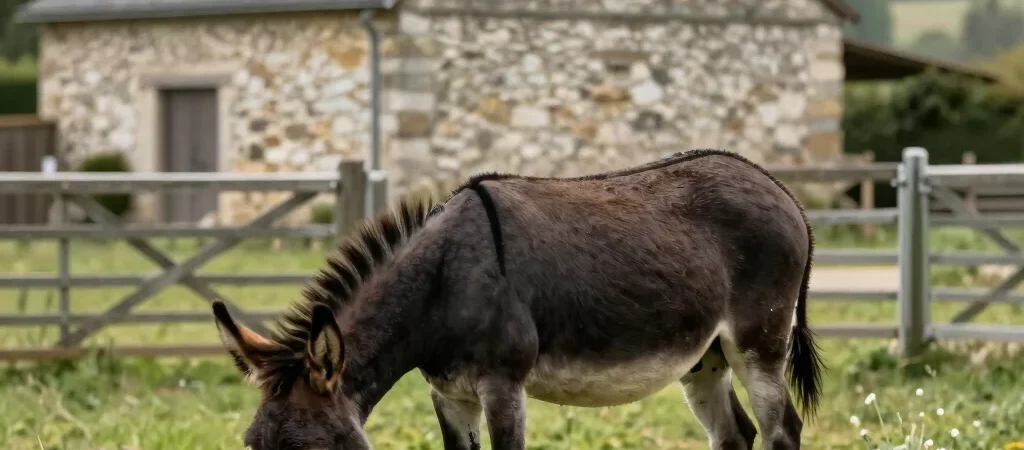
A donkey can look settled in the pasture while a small change in appetite, movement, or behavior goes unnoticed. For the Grand Noir du Berry, as for any donkey, everyday well-being depends on attentive care rather than a single ideal feed or schedule. A calm routine makes it easier to notice what is normal for the individual animal.
Start with daily observation
Take a moment to check how the donkey is walking, eating, and interacting with its surroundings. Look for changes in posture, energy, or willingness to move, and note whether the animal is drinking and behaving as usual. These observations are not a diagnosis, but they can help an owner explain a concern clearly to a veterinarian.
Keep feeding individual
A donkey’s diet should be planned around its body condition, workload, pasture, and health rather than assumptions based on breed name alone. Forage and access to clean water are central parts of everyday management, while grazing and supplementary feed may need to be adjusted to the animal and season. A veterinarian or qualified equine nutrition professional can help when an animal’s needs are unclear or its condition changes.
Feet, shelter, and routine
Regular hoof checks, appropriate farrier care, and shelter from harsh weather all belong in a practical care plan. In a damp spell on a Berry pasture, for example, checking the feet and the condition of the ground is more useful than relying on a fixed calendar alone. Keep care records, and seek professional advice promptly if you notice persistent discomfort, lameness, or a marked change in behavior.