
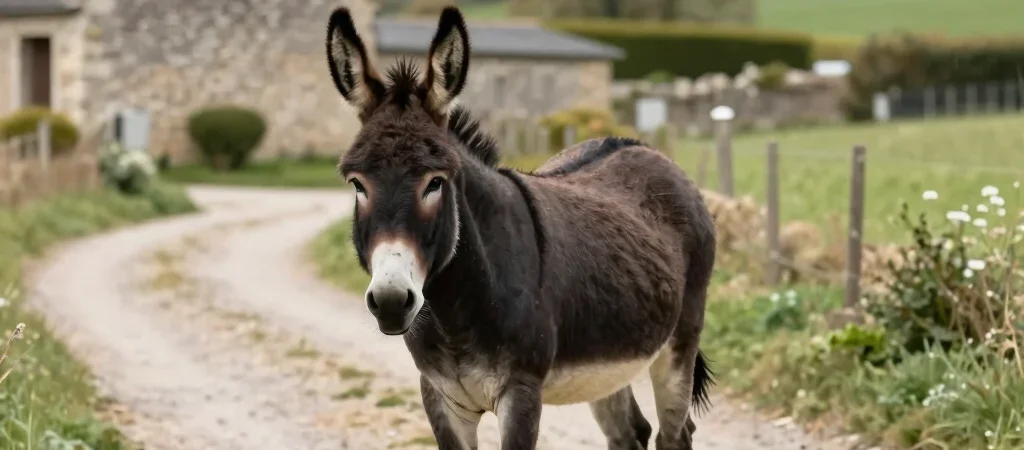
A dark donkey on a country lane can prompt a deceptively simple question: how long has the Grand Noir du Berry been part of this landscape? The breed is associated with Berry, a historic region in central France, and its identity is closely connected to rural life there. Following that connection is more useful than forcing a precise origin story where the evidence may be incomplete.
A breed shaped by place
Berry’s farms, villages, and connecting paths created a setting in which working donkeys had practical value. As with other regional breeds, local animals were shaped over time by the tasks people needed them to do and the conditions in which they were kept. The name points to that regional association, though it should not be treated as proof of one exact founding moment.
Reading the historical record
Breed histories often draw on several kinds of evidence, including written accounts, photographs, and knowledge passed between keepers. Those sources may differ in date and detail, so a careful account distinguishes documented information from later interpretation. When a claim about the breed’s beginnings sounds unusually exact, it is worth asking what source supports it.
Heritage beyond nostalgia
The Grand Noir du Berry is part of Berry’s rural heritage, but its history is not only a story about the past. Understanding how people worked with these animals can help explain why their traits and care needs matter today. The most useful starting point is simple: look at the evidence, keep the regional context in view, and leave room for what remains uncertain.