
Origins & Context
The Grand Noir du Berry in the Historical Record
A measured look at the breed's regional roots, the livestock fairs and farmsteads of Berry, and what the surviving documents can and cannot tell us.
Rural roots
Working companions of the Berry countryside
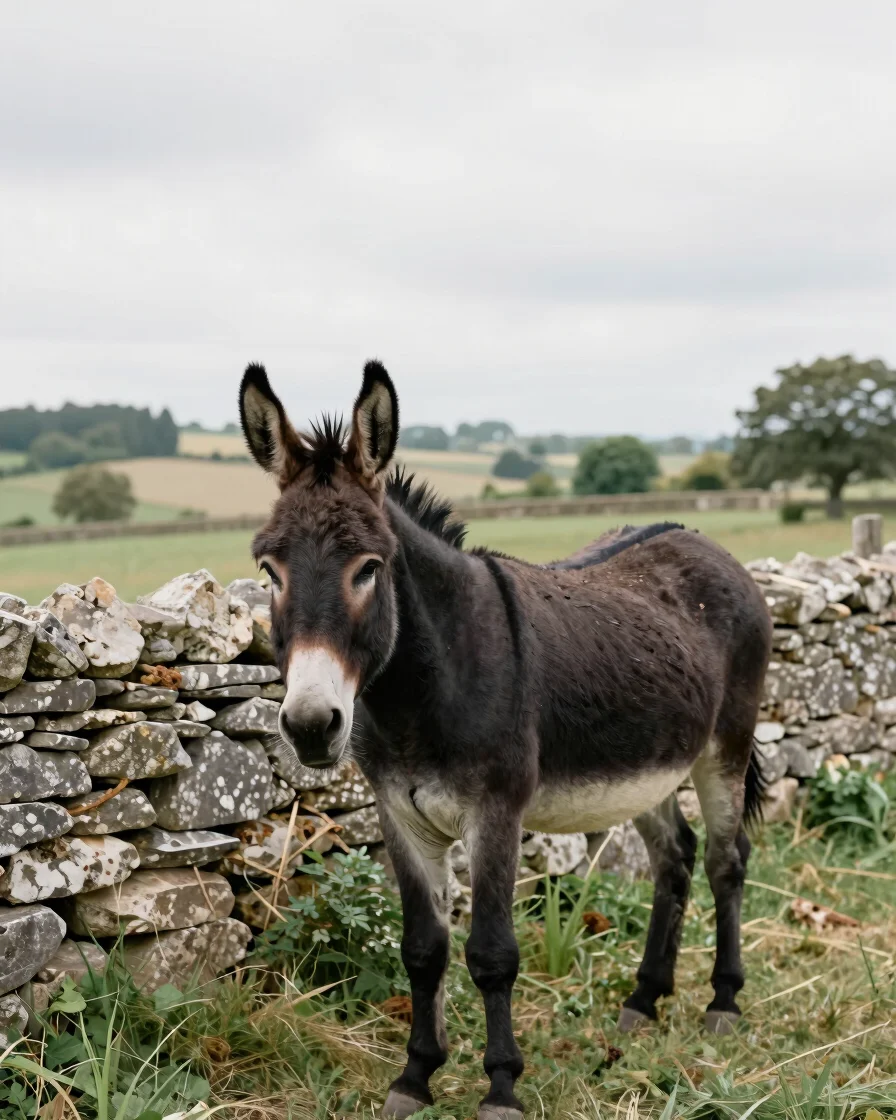
The donkeys associated with the Berry province grew up alongside its farmsteads, market towns, and seasonal livestock fairs. Their sturdy build and dark coat made them practical partners for hauling, carrying, and everyday work on small holdings.
Much of what is known about the working environment of the nineteenth century comes from local records and rural accounts. These sources describe the role of the animal in daily life, though they rarely offer detailed portraits of the breed itself, so claims about its exact lineage should be treated with care.
Agriculture and archives
How farming and documentation changed over time
Across central France, agricultural life shifted gradually through the nineteenth and twentieth centuries. Mechanization, changing markets, and new land use reduced the everyday need for working donkeys, and the way rural life was recorded changed with it.
Fairs, registers, and farm inventories offer useful but uneven evidence. Read together, they suggest patterns rather than certainties, and the careful reader will distinguish documented facts from later interpretation.